Showing posts with label bikejoring. Show all posts

Thursday, March 5, 2009

Typical Kansas Weather

On Saturday morning I awoke to find five inches of snow on the ground. I was to bed late and up early, so it must have fallen pretty quickly. Yesterday was into the 60's, and today could hit upper 70's!

The woodcock flight has reached NE Kansas, as the dogs and I managed to put up six in a very short period on Sunday morning. We don't have much experience with woodcock, but they seemed very jumpy in the snow. The dogs as usual were running the edges looking for quail, but the woodcock seemed more dug in and would flush wild as the dogs ran, or I walked, past. I did come across one guy hunting with a yellow lab. We didn't speak, only waved at a distance, but I have to assume he was hunting rabbits. He probably wondered what I was doing walking around with dogs and no gun. As usual we didn't find any quail. Except for one covey we found while bikejoring last week, I haven't seen any wild quail close to home in almost three years.

Other than that I thought I'd share some pictures my father sent to me. He's purchased some fancy pants DSLR and telephoto lenses and has been getting some pretty amazing pictures. This spring I hope to get a blind on a chicken lek to get some pictures of their mating rituals.

If you click on the pictures you can see full-size versions. The look on the pilot's face is enough to give me a chuckle, I wonder what he was thinking.

Friday, November 14, 2008

Bikejor Video

We don't usually go this fast, but I only had one hand to break with. They like the colder weather much better!

Wednesday, September 3, 2008

The New Garmin DC30

I've been running one of the new DC30's for a couple weeks now, and this past weekend ran two in "hunting situations." In short, the system works pretty well. There are, however, a couple things that you, the pointing dog enthusiast, can do to make the system work better for you.

1. Change the alert setting to tone 6 (EDIT: TONE 8). I think this particular tone is the easiest to hear, as it's a longer chirping sound.

2. Keep the Astro 220 handy. That does not mean in a backpack, hunting vest, etc. I keep mine on my chest, mounted to the strap on my vest. This gives you quick access to the screen, and allows you to hear the alert of a pointing dog more easily.

3. Change the dog type on each DC20 or DC30 to "pointing dog." I've noticed that in the Auto mode it can sometimes tell me a pointing dog is sitting. In "pointing dog" mode, it could report a defacating or resting dog as pointing, but at least then you get an alert. In the Auto mode, if it reported a pointing dog as sitting, the alert would not be sounded.

4. Be sure to pay close attention to the compass in the "dog" screen. If the arrows seem to be indicating any sort of inacurracy, then be sure to calibrate the compass. It only takes 30 seconds, and can be done quickly in the field while your worm burner is making a long cast down a treeline. Properly calibrated, the unit is very accurate, scary accurate, and has walked me right up the nose of pointing setters in thick cover. I have a few more pheasant tails in my fly tying bin to show for it.

The above being said, I expect pracitcal range for an eastern type bird hunter to be around 500 yards, depending on the countour of the land. I haven't found that heavily wooded areas decrease the range, but hills do. I put the DC30 on a dog while bikejoring, and even with a clear line of site (no trees), the Astro lost contact after we crested a hill 700 yards away. On the prairies, I have tracked dogs beyond 900 yards with the DC20 before I got them turned, and the DC30 should be better.

I think the newer unit should probably be more durable, the only possible weak spot being the antenna. However, it is long and thin, and I think will stand up to any wear and tear my dogs could ever expose them to, and Ike consistently hunts the early season with blood all over his face and chest--that's just the nature of the beast when you put together a hard-running dog with thick cover.

Kudos to Garmin for making the end of the nylon collar pointed. It makes working with that thick nylon much easier.

Monday, August 18, 2008

Some Bikejoring Tips

It's been more than a month, and I've bikejored with the dogs a dozen times now. I've only changed my rig a couple times and have come to something I'm happy with--at least enough that I'm not going to waste time monkey'ing with it. I try to road them every other, or every third day. It's not always possible, and I haven't been strict about the schedule, but they're getting worked enough. Here are a few things I've learned:

1. We always park and start in the same spot, go east some distance, and turn around and come back. With country roads in the 1-mile grid pattern, no need to get complicated. It makes planning a routine easier.

2. Water the dogs down head to toe before you start, they'll pull harder for longer.

3. If you can plan to go over a creek or by accessible pond, it's nice to be able to get the dogs wet again halfway through the exercise.

5. Wear a Camel-bak or something to water the dogs. Seeing a trend here? Also, it's best not to let them gorge themselves on water. It is better to give them small amounts every mile to wet their mouths, which helps them cool themselves.

4. I'm happy with a 10-minute mile pace, including breaks. That typically means 6-minute mile pace while running, or about 10mph. Any slower and the dogs kick into a trot instead of the gallop, and I'm sure the "power curve" ramps once they're into the gallop, as they are kicking off with both rear feet almost simotaneously.

5. Look into disc brakes before you buy a bike with traditional pads. I've nearly worn through the pads on my rear tire already. I'm not advocating discs, just check them out; they may be better from a functional and longevity standpoint.

6. Pull over and stop when a vehicle is about to pass you, no matter the direction. It'll make you, and them, feel better about it.

7. Don't overdo it. The dogs need their rest.

Tuesday, July 22, 2008

More Bikejor and Other Training

I've been trying to bikejor with the dogs every other day or day and a half, with free runs on the off days. We've had some serious heat the past few days, so I've only been free-running them at a local dog park, nearly every day. Sage gets in a good bit of swimming there, as well. I think they were in pretty good shape to begin with, but I can certainly see an improvement in toughness of their pads.

The dog park also offers me an opportunity for some reminders on the virtues of "whoa." I like my dogs to think that "whoa" means "birds." So, as they're careening off the terraces hunting the thicker grass, if I see a robin or meadowlark in the grass ahead I'll whoa one or both. He or they will stop with their noses in the air trying to pick up the bird. Usually after a moment they'll catch the bird moving in the grass. I'll walk in and flush the bird. I let them find plenty on their own, as well, but they don't let them get too close, so the way it usually works is they'll wind them from a ways off, stop, and scan ahead for the bird. I like that it's making my older dog more cautious, because he's been kind of a all-or-nothing hard charging kind of bird dog.

Tuesday, July 8, 2008

The Bike

I had scanned Craig's List and Ebay for a few weeks hoping to pick up a deal on a used mountain bike, preferably a Trek or Gary Fisher or Cannondale. I think with the summer season the prices were inflated for what was out there, so I decided to bite the bullet and try to pick up a new '08 model. The local Trek dealer offered to cut me a deal with respect to MSRP on a 4300 so I pulled the trigger. Total impulse buy, oh well.


I like the ride, although I think it needs some fine tuning. The front deraileur rubs in 3rd, and sometimes the rear sticks going from 6 to 7. I'll eventually add a more-comfortable-for-gravel-roads seat, a water bottle holder, and both front and rear lights for safety's sake.

Monday, July 7, 2008

Bikejoring - A Work in Progress

I've decided that in my inaugural post I'll just jump right in. Hopefully things will move quickly enough at first that this entrance will be easily overlooked.

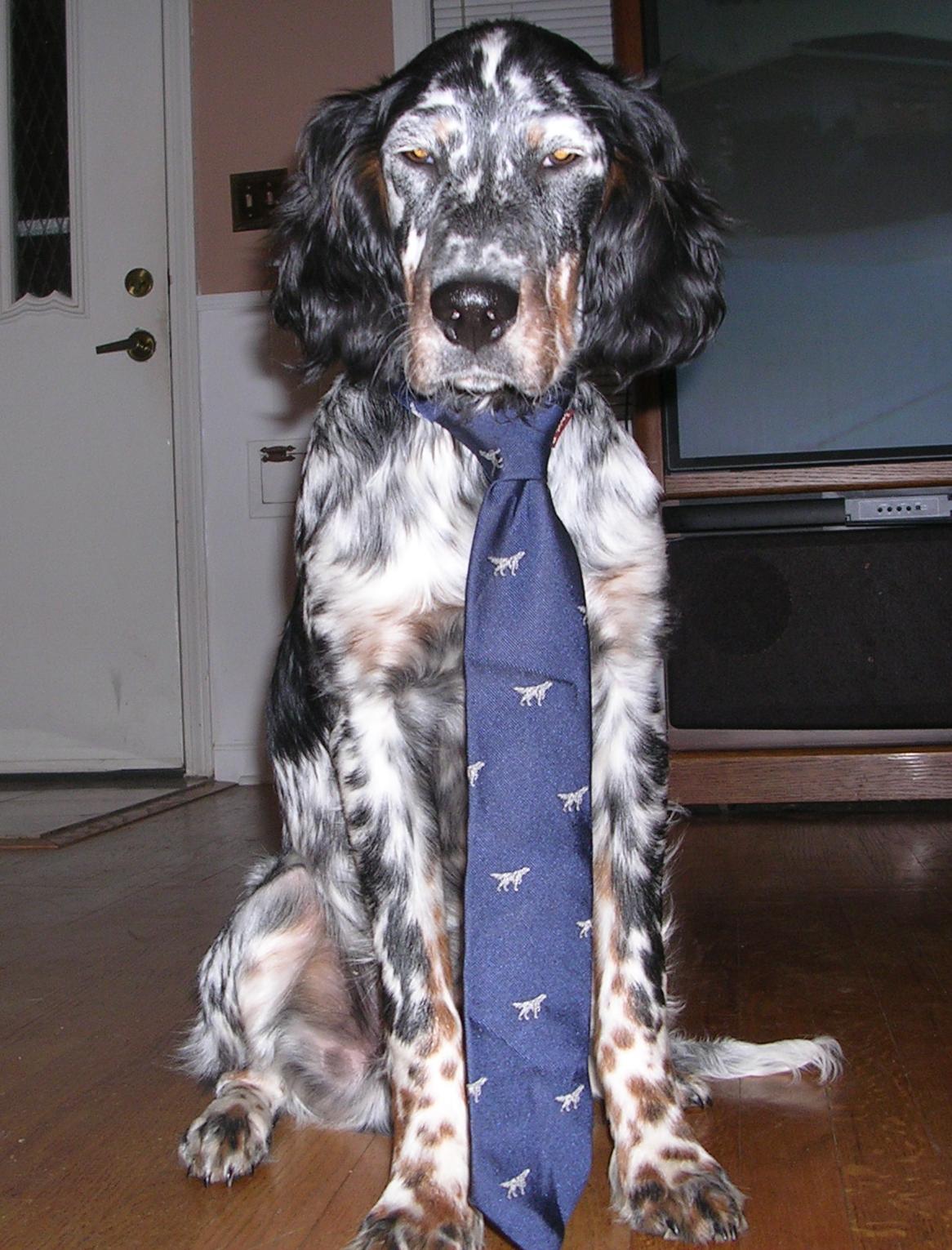
So, I have two young English setters, Sage and Ike, 3 years and 2 years old, respectively. Still puppies for most purposes. This fall we're going on an extended bird hunting trip to Montana. Typically our season starts fairly lightly, hunting prairie chickens for a weekend in Kansas around the 15th of September. But this season we'll be starting a bit earlier, and will be hunting for almost two weeks straight. In order to have dogs that will not only last the long trip, but be productive as bird dogs (finding plentiful amounts of birds), it's important that we undertake an active physical training regimen to prepare not only the cardiovascular system, but the muscles, and pads of the feet.

To that end, the Kansas summer weather can be downright oppressive. The temperatures, even nighttime lows, don't allow for extended off-leash runs of an hour or more. Anything less isn't terribly beneficial. So, in the interest of time savings and applicable benefit, I decided to purchase some roading harnesses and use resitance training (roading) to whip the pups into shape. Basically, the dogs pull against a resistance, which effectivly compresses a longer free-run into a shorter period of time. Being a single guy and having no access to an ATV, I ruled out using my pick-up and opted to explore "bikejoring."

For the uninitiated, bikejoring is a little known sport in which dogs are used to pull a rider on a bicycle. A modification on the more popular skijoring, I can't find much written on the subject. Really, only two sites and a blog I found have useful information. Here are the links:

http://www.sos.net/~brucec/bkjr.htm

http://home.earthlink.net/~abakansams/bikejor.html

http://bikejor.blogspot.com/

In the past week I've dived head first into this endeavor, purchasing an expensive mountain bike, the harnesses, and associated tack. So far I've worked each dog four times and have learned through trial and error (my favorite method) some of the finer points, which I plan to expand upon later.